Follow India Renewable Energy News on WhatsApp for exclusive updates on clean energy news and insights
BIEPA Calls for Verified Information on E20 Fuel, Highlights Benefits of India's Ethanol Blending Programme
Jul 14, 2026
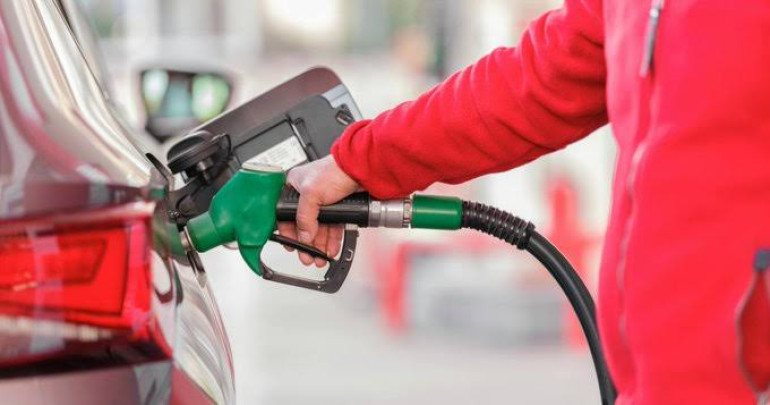
The Bharat Independent Ethanol Producers Association (BIEPA) has urged consumers to rely on verified scientific and regulatory information regarding E20 ethanol-blended petrol, cautioning that misleading and unverified claims circulating on social media are creating unnecessary confusion about the fuel's safety and performance. The association stated that India's ethanol blending programme is backed by extensive research, vehicle testing, and regulatory oversight, while delivering significant economic, environmental, and energy security benefits.
According to BIEPA, the nationwide rollout of E20 petrol marks a major milestone in India's transition towards cleaner transportation fuels. The association encouraged motorists to seek information from credible sources such as the Government of India, Ministry of Petroleum and Natural Gas (MoPNG), oil marketing companies (OMCs), vehicle manufacturers, and recognised scientific institutions rather than relying on unverified online content.
India's Ethanol Blended Petrol (EBP) Programme has become one of the world's fastest-growing biofuel initiatives. The programme aims to reduce the country's dependence on imported crude oil by blending domestically produced ethanol with petrol while simultaneously supporting farmers, promoting rural industries, and lowering greenhouse gas emissions from the transport sector. According to the Ministry of Petroleum and Natural Gas, the initiative has helped India save more than Rs 1.90 lakh crore in foreign exchange since 2014-15 by reducing crude oil imports.
The ethanol programme has also created a stable market for agricultural feedstocks and by-products, including sugarcane molasses, maize, broken rice, and other surplus agricultural produce, providing farmers with additional income opportunities while strengthening the rural economy. By converting agricultural surpluses into transport fuel, the programme supports both energy security and sustainable agricultural development.
Pushpinder Singh, President of BIEPA, stated that India's ethanol blending programme has been developed through years of scientific research and close collaboration between government agencies, automobile manufacturers, oil marketing companies, fuel producers, and research organisations. He emphasised that consumers can have confidence in the quality and safety of government-approved E20 fuel and warned that misinformation could undermine a nationally important initiative that benefits both the economy and the environment.
Addressing concerns about engine compatibility, BIEPA said there is no credible scientific evidence or official investigation linking BIS-compliant E20 petrol sold through authorised retail outlets to widespread engine damage. The association noted that E20 fuel has undergone extensive testing by organisations including the Automotive Research Association of India (ARAI), automobile manufacturers, and oil marketing companies before its commercial introduction. Vehicle manufacturers have also progressively introduced E20-compatible vehicles, in line with the government's phased implementation roadmap.
On the issue of fuel efficiency, BIEPA explained that although ethanol contains slightly lower energy content per litre than conventional petrol, its higher octane rating enables cleaner and more efficient combustion. As a result, any reduction in mileage under normal driving conditions is generally limited to around 2 to 6 percent, substantially lower than many exaggerated claims circulating online.
The association also responded to concerns regarding water consumption during ethanol production. It noted that modern ethanol manufacturing facilities increasingly employ advanced technologies such as water recycling systems, condensate recovery, and Zero Liquid Discharge (ZLD) processes to minimise freshwater consumption. In addition, a growing share of India's ethanol production is derived from agricultural by-products and surplus feedstocks rather than crops cultivated exclusively for fuel production, improving overall resource efficiency.
BIEPA further clarified that the use of BIS-compliant E20 fuel purchased from authorised fuel stations does not invalidate vehicle warranties or motor insurance policies, provided the fuel is used in accordance with the vehicle manufacturer's recommendations.
The association also pointed to international experience, noting that ethanol-blended fuels have been successfully used for decades in several countries. Brazil has long operated one of the world's highest ethanol blending programmes, while the United States widely uses blends such as E15 and higher in eligible vehicles. Several other countries have similarly adopted biofuel blending programmes as part of their strategies to improve energy security, reduce fossil fuel imports, and lower transport-related emissions.
India has steadily accelerated ethanol blending under the National Policy on Biofuels and has achieved significant progress toward its blending targets in recent years. The programme forms an important component of the country's broader strategy to reduce oil import dependence, support farmers, promote cleaner fuels, and advance its climate commitments through lower carbon emissions from the transportation sector.
BIEPA concluded that India's successful transition to E20 demonstrates the viability of ethanol as a cleaner transport fuel when produced sustainably and used in compatible vehicles. The association reiterated that informed public awareness, scientific evidence, and regulatory compliance will be essential for ensuring the continued success of the country's biofuel programme while strengthening India's long-term energy security.
Related News
International Solar Alliance Seeks Consultants to…
The International Solar Alliance (ISA) has invited bids from eligible consulting…
Hinduja Renewables Crosses 4 TWh Green Power Generation…
Hinduja Renewables Energy Private Limited (HREPL), the renewable energy arm of the…
Mahavitaran CMD Lokesh Chandra Honoured for Driving…
Lokesh Chandra, Chairman and Managing Director of Maharashtra State Electricity…