Follow India Renewable Energy News on WhatsApp for exclusive updates on clean energy news and insights
Uttar Pradesh's 47 Lakh Electricity Load Revisions Raise Questions Over Grid Readiness and Distribution Infrastructure
Jul 12, 2026
The revision of sanctioned electricity load for nearly 47 lakh consumers across Uttar Pradesh has sparked widespread debate over not only its impact on consumer billing but also the state's ability to support rising electricity demand. While the Uttar Pradesh Power Corporation Limited (UPPCL) maintains that the exercise complies with regulatory provisions, consumer groups and power sector experts have raised concerns that higher sanctioned loads could place additional stress on an already burdened distribution network if infrastructure upgrades do not keep pace.
The issue has drawn particular attention in Lucknow, where the sanctioned load of 3,87,304 electricity consumers has been revised under the utility's Revenue Management System (RMS). The highest number of revised connections was reported in Amausi (1,63,343 consumers), followed by Jankipuram (85,448), Gomti Nagar (73,831) and Lucknow Central (64,682). Following SMS notifications regarding the revised sanctioned load, several thousand consumers reportedly sought a review, alleging that the changes were implemented without obtaining their prior consent.
Defending the initiative, Madhyanchal Vidyut Vitran Nigam Limited (MVVNL) Managing Director Ria Kejriwal stated that the revisions were carried out in accordance with the Uttar Pradesh Electricity Regulatory Commission (UPERC) Electricity Supply Code, 2005, and the tariff order for FY 2025-26. According to UPPCL, consumers whose electricity demand exceeded their approved sanctioned load on three occasions between April 1, 2025, and March 31, 2026, had their sanctioned load automatically regularised based on the lowest recorded maximum demand during that period.
The utility has argued that the revised methodology provides a more accurate assessment of actual consumer demand while reducing future penalties. Under existing tariff provisions, domestic consumers exceeding their sanctioned load are liable to pay 100 percent excess demand charges, whereas commercial and other categories can face penalties of 200 percent. Once the sanctioned load is officially revised, consumers operating within the updated limit are no longer subject to these excess demand charges.
According to UPPCL, the revised load data will also help electricity distribution companies plan network augmentation more effectively by identifying actual consumption patterns. Better demand assessment could support investments in transformers, feeders, substations and transmission infrastructure, reducing transformer failures, voltage fluctuations and network faults while improving the reliability of electricity supply.
However, consumer organisations have questioned whether the distribution infrastructure is capable of supporting the additional connected load. The Upbhokta Parishad estimates that the sanctioned load of nearly 47 lakh consumers has increased collectively by around 3,654 MW (36.54 lakh kW). In Lucknow alone, the revised connections could add approximately 350 MW to the city's connected demand, potentially increasing pressure on local electricity infrastructure during peak summer months.
The organisation argues that an increase in sanctioned load should not remain merely an administrative or billing exercise, as higher connected demand eventually translates into greater loading on transformers, distribution feeders, substations and transmission lines. Like many rapidly growing urban centres, Lucknow already experiences seasonal challenges such as overloaded transformers, voltage fluctuations, feeder tripping and localised outages during periods of high electricity demand.
Referring to Central Electricity Authority (CEA) planning principles, the consumer body noted that during peak demand periods, the diversity factor reduces significantly, causing actual electricity demand to move closer to the total connected load. According to the Parishad, Uttar Pradesh currently operates around 480 substations at the 132 kV level with a combined transformation capacity of approximately 69,529 MVA, while the state's total connected consumer load has reportedly reached nearly 8.57 crore kW. The organisation contends that this widening gap between sanctioned consumer demand and available network capacity contributes to recurring transformer failures, overloaded feeders and voltage instability.
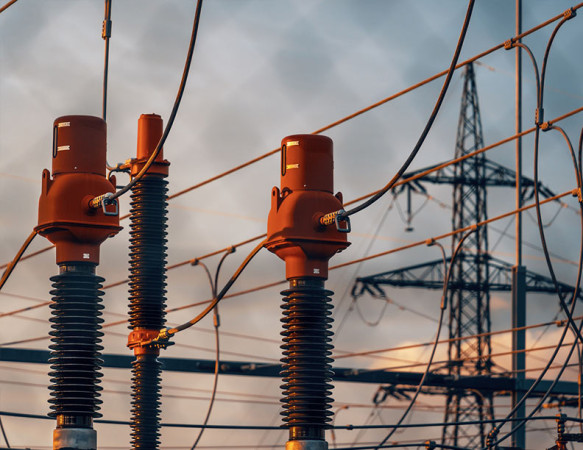
Power sector experts have echoed concerns regarding future infrastructure requirements. Shailendra Dubey, Chairman of the All India Power Engineers Federation, observed that if the revised sanctioned loads accurately represent long-term electricity demand, utilities will need to significantly expand and modernise the distribution network. This would require investments in new 132 kV, 220 kV and 33/11 kV substations, augmentation of existing substations with higher-capacity transformers, installation of additional distribution transformers, strengthening of transmission and distribution lines, feeder upgrades, and deployment of modern grid technologies capable of handling rising peak loads.
The developments highlight the broader challenge facing electricity distribution companies across India as residential electricity consumption continues to increase due to urbanisation, rising household appliance usage, electric mobility, and greater adoption of air-conditioning. While accurate load assessment can improve network planning and revenue management, experts note that sustained investment in grid modernisation and distribution infrastructure will be essential to ensure reliable electricity supply and accommodate future demand growth without compromising service quality.
Related News

International Solar Alliance Seeks Consultants to…
The International Solar Alliance (ISA) has invited bids from eligible consulting…
Hinduja Renewables Crosses 4 TWh Green Power Generation…
Hinduja Renewables Energy Private Limited (HREPL), the renewable energy arm of the…
Mahavitaran CMD Lokesh Chandra Honoured for Driving…
Lokesh Chandra, Chairman and Managing Director of Maharashtra State Electricity…