Follow India Renewable Energy News on WhatsApp for exclusive updates on clean energy news and insights
Environment Panel Clears 260 MW Dulhasti-II Hydropower Project on Chenab
Dec 29, 2025
As the Centre accelerates the execution of stalled infrastructure projects in the Indus river basin, the Ministry of Environment’s sectoral Expert Appraisal Committee (EAC) for hydropower has recommended environmental clearance for the 260 MW Dulhasti Stage-II hydroelectric project on the Chenab river.
According to the minutes of the committee’s meeting held on December 19, the project will come up in Jammu and Kashmir’s Kishtwar district and will be developed by state-run NHPC Limited at an estimated investment of Rs 3,277.45 crore.
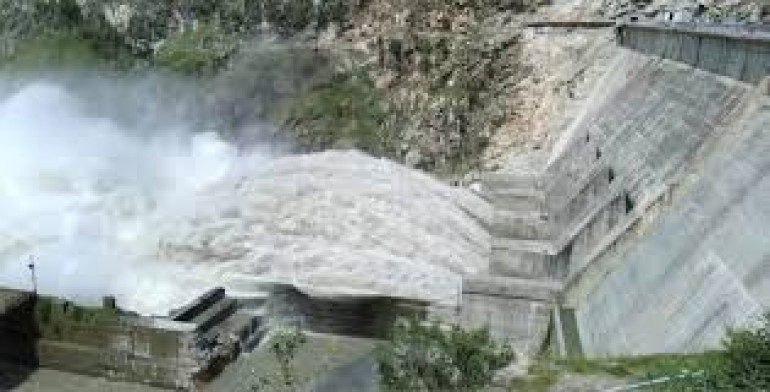
Dulhasti Stage-II will build upon the existing infrastructure of the 390 MW Dulhasti Stage-I project, which was commissioned in 2007 as a run-of-the-river scheme. The second phase will utilise the current dam, reservoir, and power intake systems, while sourcing additional water from the Marusudar river—a tributary of the Chenab—through the Pakal Dul project.
While recommending clearance, the EAC took note of the transboundary nature of the Chenab basin, which is shared by India and Pakistan under the Indus Waters Treaty (IWT) of 1960. The panel observed that the project’s design parameters were originally aligned with the treaty’s provisions.
However, the committee also recorded that the Indus Waters Treaty has been suspended with effect from April 23, 2025, following the Pahalgam terror attack earlier this year. Under the IWT framework, Pakistan had rights over the Indus, Jhelum and Chenab rivers, while India exercised control over the Ravi, Beas and Sutlej.
Since placing the treaty in abeyance, the Centre has fast-tracked several hydroelectric projects in the Indus basin, including Sawalkote, Ratle, Bursar, Pakal Dul, Kwar, Kiru, and the Kirthai-I and II projects.
The environmental clearance for Dulhasti-II will be subject to standard and project-specific conditions. These include the preparation and implementation of a river conservation plan to address hydrological changes arising from the operation of the Dulhasti-II and Pakal Dul dams.
Related News

TERI Reintroduces Biomass Gasifier as Low-Cost Alternative…
The Energy and Resources Institute has revived its biomass gasifier technology to…

ISMA Supports PM Modi’s Biofuel Push to Strengthen…
The Indian Sugar and Bio-Energy Manufacturers Association (ISMA) has expressed strong…

Organic Recycling Systems Ltd. (ORSL) and SLPP Re-New…
Organic Recycling Systems Ltd. (ORSL) has entered into a strategic Memorandum of…