Follow India Renewable Energy News on WhatsApp for exclusive updates on clean energy news and insights
India and Japan Deepen Clean Energy Partnership, Launch Biogas Initiative and Advance Green Hydrogen Cooperation
Jul 06, 2026
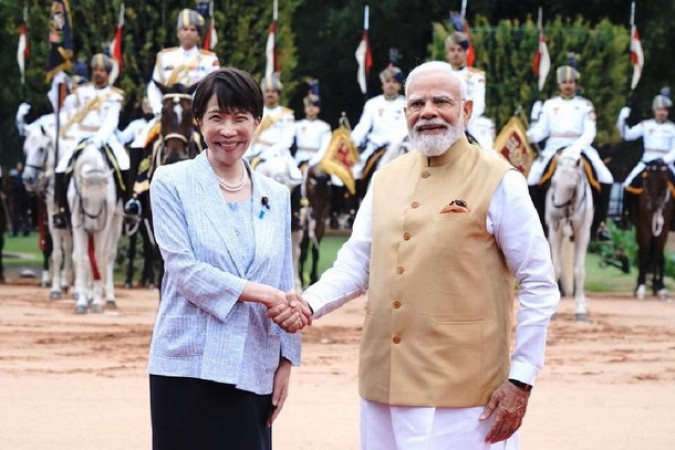
India and Japan have agreed to significantly strengthen their clean energy partnership by expanding collaboration in biogas, green hydrogen, clean ammonia, solar technologies, and energy security as part of a broader effort to enhance their Special Strategic and Global Partnership. The announcements were made during the 16th India-Japan Annual Summit held in New Delhi, where the two countries also reaffirmed their commitment to resilient supply chains, technology cooperation, and sustainable economic growth.
During the summit, Narendra Modi and Sanae Takaichi reviewed the progress of bilateral initiatives and outlined a roadmap to deepen cooperation across energy, defence, digital technologies, economic security, and Indo-Pacific stability. Energy emerged as one of the central themes of the discussions, reflecting the importance both nations place on securing reliable and diversified energy supplies amid increasing geopolitical uncertainties and volatility in global energy markets.
Recognising that India and Japan are among Asia's largest energy consumers, the two leaders agreed to enhance cooperation across the entire energy value chain. They committed to working together through bilateral and multilateral platforms to strengthen energy supply chains, promote stable global energy markets, and explore joint investments in maritime energy transport infrastructure. Both sides also reiterated the importance of maintaining uninterrupted global energy trade routes, including through the Strait of Hormuz, which remains one of the world's most critical oil and liquefied natural gas (LNG) shipping corridors.
A major outcome of the summit was the launch of the India-Japan Cooperative Biogas for Growth (CBG) Initiative, aimed at supporting India's plans to establish 1,000 compressed biogas (CBG) and organic fertiliser plants across the country. The initiative will facilitate cooperation in technology, project development, and knowledge sharing to accelerate biogas production from agricultural residues, livestock waste, and other organic feedstocks. The two governments also welcomed the signing of a Memorandum of Cooperation involving Japan's Ministry of Economy, Trade and Industry, India's Ministry of Cooperation, and the Department of Animal Husbandry and Dairying to support the initiative.
The leaders also reaffirmed their commitment to advancing collaboration in green hydrogen and clean ammonia, recognising both fuels as critical for reducing industrial emissions while improving long-term energy security. They reiterated support for the proposed clean ammonia project in Odisha, which continues to receive backing from both governments. In addition, India and Japan agreed to explore further cooperation in renewable energy technologies, including solar photovoltaic (PV) manufacturing, hydrogen value chains, clean ammonia production, and nuclear energy, supporting the transition toward low-carbon energy systems.
Beyond renewable energy, both countries adopted the India-Japan Joint Declaration on Economic Security Cooperation, expanding collaboration in strategically important sectors such as semiconductors, critical minerals, information and communication technology (ICT), clean energy technologies, and pharmaceuticals. The declaration reflects growing efforts by both governments to reduce supply chain vulnerabilities and strengthen resilience in industries that are essential for economic and national security.
The two leaders also expressed concern over the increasing use of economic coercion, export restrictions, and non-market trade practices that can disrupt the availability of critical minerals and advanced technologies. They agreed to promote diversified and reliable supply chains, strengthen cooperation on high-technology trade, and continue consultations to facilitate responsible technology transfers while respecting each country's regulatory frameworks.
Innovation and digital transformation also featured prominently during the summit. India and Japan welcomed the launch of the India-Japan AI Strategic Dialogue and adopted a Joint Statement on AI Cooperation, aimed at promoting collaboration in artificial intelligence, digital infrastructure, research, and emerging technologies. The initiative is expected to complement cooperation in energy management, industrial automation, smart manufacturing, and grid modernisation, where AI is increasingly being deployed to improve efficiency and reliability.
The leaders further welcomed the steady rise in Japanese investment in India, noting continued progress toward the bilateral investment target of ¥10 trillion. They agreed to accelerate the review of the India-Japan Comprehensive Economic Partnership Agreement (CEPA) while expanding cooperation across logistics, agriculture, food processing, textiles, healthcare, pharmaceuticals, industrial machinery, and financial services. The inauguration of the India-Japan SME Forum was also welcomed as a step toward increasing business partnerships, technology transfer, and industrial collaboration between companies from both countries.
The expanded clean energy partnership reflects the growing strategic importance of India-Japan cooperation in supporting the global energy transition. As both nations work toward achieving their respective climate commitments and strengthening energy security, joint initiatives in biogas, hydrogen, clean ammonia, renewable energy technologies, and resilient supply chains are expected to play an increasingly important role in advancing sustainable economic growth and reducing dependence on conventional fossil fuels.
Related News
International Solar Alliance Seeks Consultants to…
The International Solar Alliance (ISA) has invited bids from eligible consulting…
Hinduja Renewables Crosses 4 TWh Green Power Generation…
Hinduja Renewables Energy Private Limited (HREPL), the renewable energy arm of the…
Mahavitaran CMD Lokesh Chandra Honoured for Driving…
Lokesh Chandra, Chairman and Managing Director of Maharashtra State Electricity…