Follow India Renewable Energy News on WhatsApp for exclusive updates on clean energy news and insights
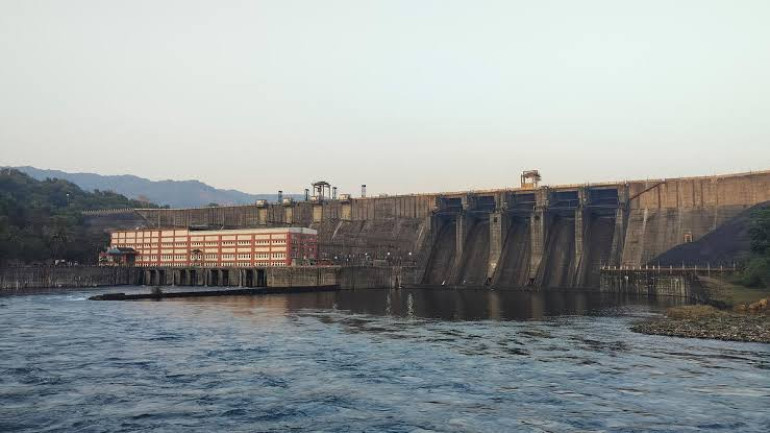
Karnataka Reaffirms Commitment to 2 GW Sharavathi Pumped Storage Project Amid Environmental Review
Jul 22, 2026
The Karnataka government has reiterated its resolve to develop the proposed 2 GW Sharavathi Pumped Storage Project (PSP), positioning the project as a key component of the state's long-term energy security strategy despite ongoing environmental concerns and opposition from conservation groups. The project is expected to enhance grid flexibility and support Karnataka's rapidly expanding renewable energy capacity by providing large-scale energy storage.
Speaking at the 57th Foundation Day celebration of Karnataka Power Corporation Limited (KPCL) in Bengaluru, Deputy Chief Minister D.K. Shivakumar stated that the Sharavathi project has remained pending for several years despite its strategic importance. He said the government is actively pursuing the required statutory and environmental approvals and remains committed to moving the project forward. According to him, the state's growing electricity demand and increasing dependence on renewable energy make investments in pumped storage infrastructure essential for ensuring reliable round-the-clock power supply.
Addressing criticism surrounding the project, Shivakumar said that several major infrastructure initiatives have faced resistance during their planning stages but later proved beneficial to the state's development. He cited the Yelahanka gas-based power plant as an example, noting that despite initial opposition, the facility now contributes significantly to Karnataka's electricity generation capacity.
The Deputy Chief Minister also highlighted Karnataka's progress in renewable energy development, particularly the 2 GW Pavagada Solar Park, one of India's largest utility-scale solar projects. Unlike conventional land acquisition models, the project allows farmers to lease their land while earning a stable annual income. He added that local farmers have expressed willingness to provide an additional 10,000 acres for the park's proposed expansion, with preparatory work expected to commence in the near future.
Shivakumar further underlined the state's substantial investment in electricity welfare schemes. The Gruha Jyothi Scheme, which provides free electricity to eligible households, currently benefits around 1.61 crore families, with the government spending nearly INR 10,000 crore annually. An additional INR 20,000 crore is allocated every year to subsidise electricity supplied to agricultural pump sets, taking Karnataka's total annual power subsidy expenditure to approximately INR 30,000 crore. He credited KPCL for supporting these initiatives and called upon its workforce to continue strengthening the state's power infrastructure.
The proposed Sharavathi Pumped Storage Project will be developed on the Sharavathi River in Karnataka's ecologically sensitive Western Ghats region and is planned with an installed capacity of 2 GW using reversible Francis pump-turbine technology. Pumped storage plants operate by pumping water to an upper reservoir during periods of surplus electricity generation and releasing it through turbines during peak demand, making them one of the most effective technologies for large-scale energy storage and renewable energy integration.
The project, however, continues to face environmental scrutiny. Conservation groups have raised concerns over its potential ecological impact, including the proposed diversion of forest land and the possible felling of approximately 15,000 trees across nearly 57 hectares within a biodiversity-rich landscape that is home to several endemic and endangered plant and animal species. Environmental organisations have urged authorities to undertake comprehensive impact assessments before granting final approval.
India has identified pumped storage hydropower as a critical resource for balancing its rapidly growing fleet of solar and wind projects. The National Electricity Plan projects a substantial increase in energy storage capacity over the coming decades, with pumped storage expected to complement battery energy storage systems in maintaining grid stability, managing peak demand and improving renewable energy utilisation. If it secures all regulatory clearances and is implemented as planned, the Sharavathi Pumped Storage Project will become one of India's largest pumped hydro energy storage facilities, significantly enhancing Karnataka's ability to deliver reliable, low-carbon electricity while supporting the country's broader clean energy transition.
Related News
International Solar Alliance Seeks Consultants to…
The International Solar Alliance (ISA) has invited bids from eligible consulting…
Hinduja Renewables Crosses 4 TWh Green Power Generation…
Hinduja Renewables Energy Private Limited (HREPL), the renewable energy arm of the…
Mahavitaran CMD Lokesh Chandra Honoured for Driving…
Lokesh Chandra, Chairman and Managing Director of Maharashtra State Electricity…