Follow India Renewable Energy News on WhatsApp for exclusive updates on clean energy news and insights
Transmission Sector to Attract INR 5–6 Trillion Investment by 2032 as India Expands Renewable Energy Grid: ICRA
Jul 14, 2026
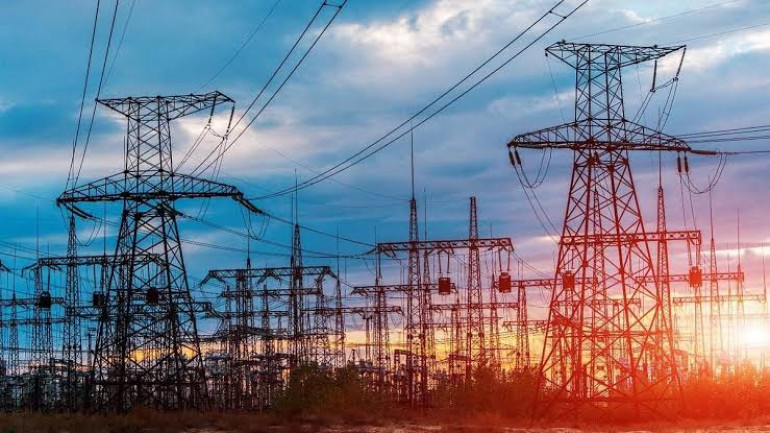
India's power transmission sector is poised for an unprecedented investment cycle, with capital expenditure of INR 5–6 trillion expected between FY2027 and FY2032, according to ICRA. The expansion is considered critical for supporting India's rapidly growing renewable energy capacity, strengthening the national grid, and ensuring timely evacuation of electricity from upcoming solar, wind, hydro and energy storage projects.
The rating agency estimates that the planned investments will help facilitate the evacuation of more than 900 GW of non-fossil fuel generation capacity by 2035-36, including nearly 548 GW of solar and wind power, in line with the National Electricity Plan. As renewable energy installations accelerate across the country, transmission infrastructure is emerging as one of the most important enablers of India's clean energy transition.
To meet future electricity demand and renewable integration targets, India will need to add approximately 20,000 circuit kilometres (ckm) of transmission lines and nearly 120 GVA of substation capacity every year over the next decade. These investments will focus on expanding interstate transmission corridors, strengthening existing networks, improving grid flexibility and enabling reliable power evacuation from renewable energy-rich states such as Rajasthan, Gujarat, Tamil Nadu and Karnataka.
According to Ankit Jain, Vice President and Co-Group Head, Corporate Ratings, ICRA, the transmission sector offers one of the largest infrastructure investment opportunities in India's power industry, driven by the government's ambitious renewable energy expansion plans and increasing electrification across sectors.
ICRA noted that the strong project pipeline has already translated into robust demand for transmission equipment. Order books and fresh order inflows for major manufacturers of transformers, conductors, towers and other transmission equipment have more than doubled since FY2022. However, the agency cautioned that manufacturing capacity constraints, shortages of skilled manpower and supply chain challenges could slow project execution unless capacities are expanded in parallel.
Despite strong policy support, execution delays continue to remain a major concern. Transmission projects frequently encounter hurdles related to land acquisition, Right of Way (RoW) approvals, forest clearances and statutory permissions, resulting in significant commissioning delays. ICRA observed that only around 12 percent of transmission projects awarded through the Tariff-Based Competitive Bidding (TBCB) route had been completed within their scheduled timelines by March 2026, while the majority experienced delays ranging from a few months to nearly three years.
These delays are increasingly affecting renewable energy developers. Insufficient transmission capacity has forced several operational solar and wind projects to depend on the Temporary General Network Access (T-GNA) mechanism, under which power evacuation remains restricted during periods of high renewable generation. As of May 2026, nearly 33 percent of the recently commissioned 54.8 GW renewable energy capacity was relying on T-GNA for grid connectivity.
ICRA highlighted that renewable energy curtailment under the T-GNA framework has remained particularly severe during peak solar generation hours, with curtailment levels reaching 50–60 percent in certain regions. Rajasthan and Gujarat, which account for a significant share of India's utility-scale solar capacity, have witnessed the highest curtailment due to delays in transmission infrastructure, whereas southern states have experienced relatively lower levels of grid congestion.
Looking ahead, around 107 GW of generation projects—including solar, wind, hybrid, hydroelectric, pumped storage and thermal plants—have already secured connectivity approvals and are scheduled to be integrated into the Interstate Transmission System (ISTS) between FY2027 and FY2031. ICRA warned that any slippage in transmission project execution could delay renewable capacity additions, increase generation losses due to curtailment and adversely affect project economics for developers.
The findings reinforce the growing importance of transmission infrastructure as India moves toward its long-term energy transition goals. While record investments in renewable energy generation continue, experts increasingly emphasise that timely expansion of transmission networks, grid modernisation, digital monitoring systems and flexible power infrastructure will be equally critical to ensuring reliable electricity supply, minimising renewable energy curtailment and achieving India's target of becoming a global clean energy leader.
Related News

Bihar Unveils Rs 1.40 Lakh Crore Energy Investment…
The Government of Bihar has presented an ambitious roadmap for transforming the…

GK Energy Revenue Jumps 71% in Q1 FY27 as Renewable…
GK Energy, a decentralised renewable energy infrastructure company focused on solar…
Siemens Energy India Q3 FY26 Revenue Surges 39.3%…
Siemens Energy India Ltd. delivered a strong financial performance in the third…