Follow India Renewable Energy News on WhatsApp for exclusive updates on clean energy news and insights
Union Cabinet Clears INR 1.275 Lakh Crore Semicon 2.0 to Accelerate India's Chip Manufacturing and Design Ambitions
Jul 16, 2026
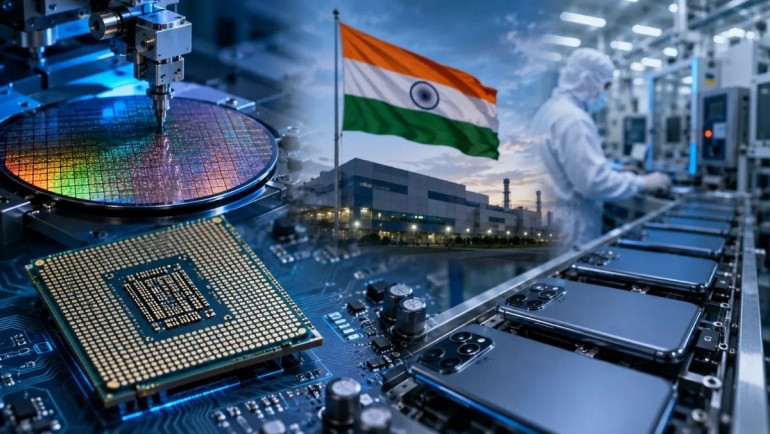
The Union Cabinet, chaired by Prime Minister Narendra Modi, has approved the Semicon 2.0 programme with a financial outlay of INR 1,27,500 crore, marking one of India's largest policy initiatives aimed at strengthening the country's semiconductor industry. The programme is designed to build a globally competitive semiconductor ecosystem by supporting the entire value chain, including chip design, fabrication, advanced packaging, semiconductor materials, equipment manufacturing, research, and skilled workforce development.
Building upon the progress of the India Semiconductor Mission (ISM) launched under Semicon 1.0, the new programme adopts a long-term strategy to reduce India's dependence on imported semiconductors while positioning the country as a trusted global manufacturing and innovation hub. The initiative is expected to encourage greater domestic production of integrated circuits, compound semiconductors, display technologies, and specialised semiconductor components that are increasingly critical for sectors such as consumer electronics, electric vehicles, telecommunications, renewable energy, defence, aerospace, healthcare, and artificial intelligence.
Semicon 2.0 is structured around six strategic pillars to strengthen every stage of the semiconductor value chain. These include expanding semiconductor design capabilities through support for indigenous intellectual property (IP), chip architecture, and system-level product development; promoting the domestic manufacturing of semiconductor equipment, specialty chemicals, gases, and advanced materials; encouraging the establishment of additional fabrication facilities covering silicon, compound semiconductor, discrete semiconductor, and display technologies; expanding India's Assembly, Testing, Marking and Packaging (ATMP) and Outsourced Semiconductor Assembly and Test (OSAT) ecosystem with advanced packaging capabilities; accelerating research into next-generation semiconductor technologies; and developing a highly skilled talent pipeline through stronger collaboration between academia and industry.
The government highlighted significant progress achieved under Semicon 1.0, with 12 semiconductor manufacturing projects approved involving cumulative investments of over INR 1.64 lakh crore. These projects include India's first commercial silicon semiconductor fabrication facility, a silicon carbide fab, an integrated gallium nitride (GaN) and MicroLED display fabrication unit, along with nine semiconductor packaging facilities catering to industries such as automotive electronics, industrial automation, telecommunications, aerospace, power electronics, and consumer devices. Commercial production has already commenced at facilities established by Micron, Kaynes Technology, and CG Semi, while another manufacturing facility is expected to become operational during 2026.
India's semiconductor design ecosystem has also witnessed rapid expansion. According to the government, 105 startups are actively developing semiconductor solutions, while 24 startup and MSME-led chip design projects have received financial assistance under the Design Linked Incentive (DLI) framework. In addition, 315 universities have adopted industry-standard Electronic Design Automation (EDA) software, enabling nearly 68,000 engineering students to gain hands-on experience in semiconductor design. Several Indian startups are currently developing application-specific integrated circuits (ASICs) and systems-on-chip (SoCs) for emerging technologies including artificial intelligence, satellite communications, drones, IoT devices, telecom infrastructure, surveillance systems, automotive electronics, and smart energy meters.
The approval of Semicon 2.0 comes at a time when global demand for semiconductors continues to rise, driven by rapid digitalisation, electrification of transport, AI computing, data centres, and next-generation communication technologies. Governments worldwide are strengthening domestic semiconductor capabilities to improve supply chain resilience following disruptions experienced during recent years. India's expanded semiconductor strategy seeks to capitalise on this global shift by attracting additional investments, fostering indigenous innovation, creating high-value manufacturing jobs, enhancing technological self-reliance, and integrating the country more deeply into global semiconductor supply chains.
With sustained policy support, increasing private sector participation, and growing collaboration between industry, academia, and research institutions, Semicon 2.0 is expected to play a pivotal role in establishing India as a competitive destination for semiconductor manufacturing, advanced chip design, and next-generation electronics innovation over the coming decade.
Related News

Navitas Solar and Caelux Partner to Manufacture 5…
Indian solar module manufacturer Navitas Solar has entered into a five-year strategic…
Avaada Joins ALMM List-II with 610 MW TOPCon Cell…
India's domestic solar manufacturing ecosystem has received another boost as the…

Rayzon Solar Partners with Caelux to Develop 5 GW…
Indian photovoltaic manufacturer Rayzon Solar has entered into a strategic five-year…