Follow India Renewable Energy News on WhatsApp for exclusive updates on clean energy news and insights
World Bank Approves 890 Million Dollars Financing Package to Boost PM Surya Ghar Rooftop Solar Mission in India
Jul 11, 2026
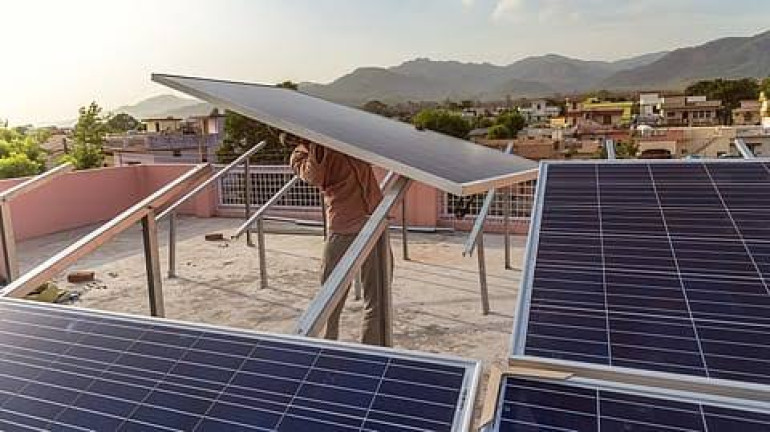
The World Bank's Board of Executive Directors has approved a major financing package worth USD 890 million to accelerate the implementation of India's PM Surya Ghar: Muft Bijli Yojana, strengthening the country's efforts to expand residential rooftop solar adoption. The programme aims to make clean electricity more accessible to millions of households, lower electricity expenses, attract private investment, and generate large-scale employment across India's rapidly growing renewable energy sector.
The financing package comprises an USD 820 million loan from the International Bank for Reconstruction and Development (IBRD), a USD 60 million concessional loan from the Clean Technology Fund (CTF), and a USD 10 million grant from the IBRD's Livable Planet Fund. In addition to multilateral funding, the initiative is expected to mobilise approximately USD 4.2 billion in private sector financing, primarily through commercial lending that will help households install rooftop solar systems with easier access to affordable credit.
The World Bank said the programme will support the nationwide rollout of the PM Surya Ghar: Muft Bijli Yojana, which was launched by the Government of India to install rooftop solar systems on one crore (10 million) residential homes across urban and rural areas. The scheme seeks to reduce household electricity bills, promote energy independence, expand distributed renewable energy generation, and encourage domestic manufacturing of solar modules, inverters, mounting structures, and other rooftop solar equipment.
India has set ambitious climate and energy transition targets, including achieving net-zero emissions by 2070 and increasing the share of non-fossil fuel-based electricity generation to 60 percent by 2035. While the country has become one of the world's fastest-growing utility-scale solar markets, residential rooftop solar has historically witnessed slower adoption due to high upfront costs, financing constraints, and limited consumer awareness. The PM Surya Ghar programme is designed to address these barriers through capital subsidies, simplified application processes, and improved financing mechanisms.
According to the World Bank, the new financing is expected to support the creation of approximately 1.7 million jobs across the renewable energy value chain, including manufacturing, installation, operations and maintenance, logistics, financing, and after-sales services. The expansion of rooftop solar deployment is also expected to stimulate demand for skilled technicians, electricians, EPC contractors, and local service providers, contributing to economic growth alongside India's clean energy transition.
Speaking on the development, Paul Procee, Acting Country Director for India at the World Bank, noted that the institution has supported India's rooftop solar sector for more than a decade, helping mobilise over USD 2 billion in investments that contributed to the growth of the country's installed solar capacity from around 500 MW to more than 27 GW. He said the latest financing would further accelerate residential solar adoption while strengthening employment opportunities across the manufacturing and installation ecosystem.
The programme also places significant emphasis on improving the institutional capacity of power distribution companies (DISCOMs), financial institutions, and rooftop solar vendors. According to Moez Cherif, Task Team Leader for the programme, the initiative will help establish integrated service delivery models while enabling collateral-free financing for eligible households, reducing financial barriers that have traditionally limited rooftop solar adoption.
The expansion of rooftop solar is expected to deliver multiple long-term benefits beyond lower electricity bills. Wider deployment of distributed solar generation can reduce peak electricity demand, minimise transmission losses, improve grid resilience, and decrease dependence on fossil fuel-based power generation. For households, rooftop solar systems can provide greater energy security while contributing surplus electricity to the grid through net metering mechanisms where applicable.
With multilateral financing, private capital mobilisation, and continued government support converging under the PM Surya Ghar programme, India is positioned to significantly expand its residential rooftop solar market, strengthen domestic clean energy manufacturing, and move closer to its long-term renewable energy and climate commitments.
Related News

Bihar Unveils Rs 1.40 Lakh Crore Energy Investment…
The Government of Bihar has presented an ambitious roadmap for transforming the…

GK Energy Revenue Jumps 71% in Q1 FY27 as Renewable…
GK Energy, a decentralised renewable energy infrastructure company focused on solar…
Siemens Energy India Q3 FY26 Revenue Surges 39.3%…
Siemens Energy India Ltd. delivered a strong financial performance in the third…