Follow India Renewable Energy News on WhatsApp for exclusive updates on clean energy news and insights
SgurrEnergy Outlines Hybrid Renewable Energy Roadmap to Deliver 24×7 Clean Power for AI Data Centres
Jul 11, 2026
The rapid expansion of artificial intelligence (AI) is significantly increasing electricity demand from data centres, making uninterrupted and carbon-free power a critical requirement for digital infrastructure. Addressing this challenge, SgurrEnergy hosted a virtual panel discussion on "The Future of Data Center Energy: Addressing Round-the-Clock Power Requirements Through Renewables, Regulation and Innovative Financing," where industry experts explored strategies for building reliable 24×7 renewable energy systems capable of supporting next-generation AI workloads.
The discussion featured SgurrEnergy's Director Arif Aga, Associate Director Nazish Shaikh, and Associate Manager Jawwad Aga, who highlighted that AI is transforming not only computing but also the way energy systems must be designed. Unlike conventional data centre server racks that typically consume between 5 kW and 10 kW, AI-enabled high-performance computing racks can exceed 100 kW, creating substantially higher power density, cooling requirements, and continuous electricity demand. The experts noted that meeting these requirements will require integrated planning across renewable generation, energy storage, grid infrastructure, and intelligent energy management rather than relying on conventional electricity procurement models.
A key focus of the discussion was the transition from annual renewable energy accounting to 24×7 Carbon-Free Energy (CFE). While many organisations currently offset their annual electricity consumption with renewable energy certificates or power purchase agreements, such approaches do not guarantee that clean electricity is available every hour of operation. The panel explained that hourly renewable energy matching—where electricity consumption is paired with carbon-free generation during each hour—provides a far more accurate measure of operational decarbonisation and energy resilience for mission-critical facilities such as AI data centres.
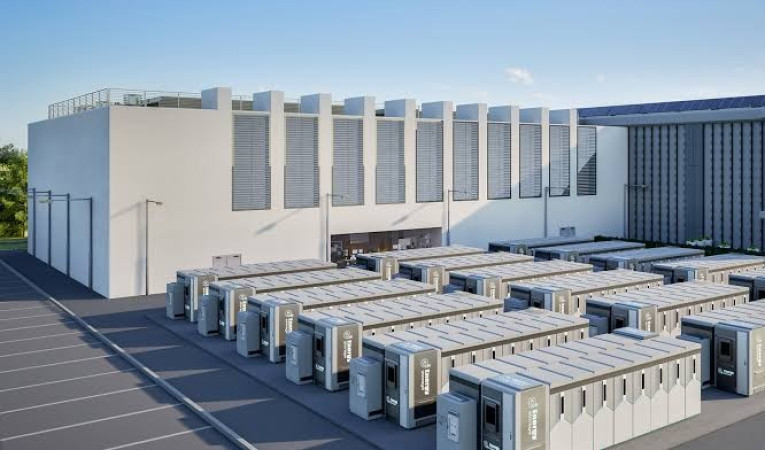
According to the experts, achieving dependable round-the-clock renewable power requires a hybrid energy ecosystem combining solar photovoltaic (PV) plants, wind power, Battery Energy Storage Systems (BESS), advanced forecasting tools, grid connectivity, and intelligent energy management platforms. Solar generation offers economical daytime electricity, wind resources complement evening and seasonal demand patterns, while battery storage shifts surplus renewable energy to periods of lower generation. Real-time monitoring and predictive forecasting further improve system stability, ensuring continuous power availability despite fluctuations in renewable generation.
The panel also stressed that the effectiveness of battery storage depends as much on engineering quality as on installed capacity. Proper thermal management remains essential, with lithium-ion batteries experiencing accelerated degradation at elevated operating temperatures. The speakers noted that every 10°C increase in battery temperature can reduce battery lifespan by nearly 50 percent, while advanced cooling techniques such as immersion cooling can extend battery life by approximately 20 percent, improving operational reliability and lowering lifecycle costs for large-scale energy storage installations.
Beyond technology, the discussion examined the financial and regulatory factors influencing renewable energy adoption by data centres. Open-access renewable power in India can typically be procured at Rs 4–5 per unit, compared with approximately Rs 8.5–10 per unit for conventional grid electricity. However, additional charges such as cross-subsidy surcharges and wheeling fees can reduce these cost advantages under third-party power purchase agreements (PPAs). The experts suggested that group captive renewable energy models, in which consumers invest directly in renewable generation assets, can significantly improve project economics, with potential savings reaching nearly 37 percent, compared with around 13 percent under conventional third-party procurement structures.
The discussion also highlighted the growing importance of supportive policy frameworks as governments and regulators seek to facilitate corporate decarbonisation. Faster grid approvals, streamlined open-access regulations, wider deployment of battery storage, and market mechanisms that recognise hourly clean energy delivery are expected to play a crucial role in accelerating renewable-powered digital infrastructure across India.
The surge in AI adoption is expected to make data centres one of the fastest-growing sources of electricity consumption globally over the coming decade. Industry analysts anticipate that energy demand from AI computing, cloud services, and hyperscale data centres will continue rising sharply, reinforcing the need for scalable renewable energy solutions capable of delivering continuous, reliable, and low-carbon electricity.
Concluding the session, the SgurrEnergy experts stated that the industry is steadily moving beyond annual renewable energy targets toward engineered energy systems capable of delivering 24×7 carbon-free electricity. They noted that hybrid solar-wind projects integrated with battery storage are likely to become the industry standard by the end of the decade, while emerging technologies such as long-duration energy storage and green hydrogen could further strengthen energy security, reduce dependence on diesel backup systems, and support the sustainable expansion of AI-driven digital infrastructure.
Related News
NIT Rourkela Develops AI-Powered Smart Monitoring…
Researchers at the National Institute of Technology (NIT) Rourkela have developed…
INVT Electric India Unveils Advanced Industrial Automation…
INVT Electric India showcased its latest portfolio of industrial automation and…
Andhra Pradesh's Proposed ‘Deemed Distribution Licensee’…
The Andhra Pradesh Government's proposal to grant "deemed distribution licensee"…